Your backyard has potential you haven’t tapped yet. Whether you’re staring at an overgrown lawn, a plain concrete patio, or just empty grass, garden backyard ideas can turn that unused space into something you actually want to spend time in. This isn’t about hiring a landscape designer or dropping thousands on a major renovation. The best backyard gardens start small, stay practical, and grow with you. Let’s walk through approaches that work for beginners and experienced gardeners alike, strategies that combine function with real, usable beauty.
Table of Contents
ToggleKey Takeaways
- Raised garden beds solve poor soil problems and typically produce twice the yield of in-ground gardens using standard 4×8×12 inch dimensions.
- Container gardening offers flexible growing options with minimum 5-gallon pots and proper drainage to accommodate different plant types and space constraints.
- Vertical gardens maximize small backyards by using trellises, wall-mounted planters, and tower systems while improving air circulation and reducing fungal disease.
- Dedicating zones for herbs and vegetables with 6-8 hours of sun and using drip irrigation reduces maintenance while improving harvests.
- Balancing productive garden areas with relaxation zones—shade structures, seating, and low-maintenance perennials—ensures you actually use and enjoy your backyard.
- Structuring gardens so 70% requires minimal upkeep lets you focus effort on high-payoff herb and vegetable zones rather than constant maintenance.
Raised Garden Beds for Easy Maintenance
Raised beds are the backbone of most productive backyard gardens. They solve one of the biggest DIY pain points: poor soil. Instead of fighting your native dirt, you build a frame and fill it with quality soil mix.
Standard raised bed dimensions are 4 feet by 8 feet by 12 inches deep (actual interior measurements). This size is manageable for one person to work, and you can reach the center without stepping into the bed. Go with untreated cedar or composite lumber, treated wood contains preservatives you don’t want leeching into vegetables.
Here’s what you need:
- Four boards (cedar or composite)
- 2×6 or 2×8 lumber works well
- Corner brackets or L-brackets for reinforcement
- Landscape fabric (optional, blocks weeds)
- Quality garden soil or potting mix
- A level
Assembly takes an afternoon with basic tools. Lay out your boards on level ground, use 3-inch deck screws to secure corners (or L-brackets if the frame will get heavy use), and check level before filling. If your ground slopes, you may need to shim the legs or dig slightly to level it out.
The payoff: no more bent-over digging, better drainage control, and you can grow vegetables or herbs without fighting clay or compacted soil. One raised bed typically produces more than twice the yield of the same footprint in-ground, because you control exactly what goes in.
Container Gardening for Flexible Growing
Not every backyard has room for raised beds, and not every gardener wants a permanent installation. Container gardening gives you total flexibility: move plants to chase the sun, bring tender perennials indoors before frost, or rearrange your garden’s layout whenever you want.
Don’t cheap out on pot size. A 5-gallon container is the practical minimum for vegetables like tomatoes or peppers. Go larger (10-20 gallons) and your plants establish deeper roots and need less frequent watering. Use pots with drainage holes, this is non-negotiable. A pot without drainage suffocates roots and kills plants.
Material choices matter:
- Plastic pots: lightweight, affordable, retain moisture longer
- Terra cotta: breathable, attractive, but dry out fast and break easily
- Ceramic: durable and attractive, heavy to move
- Fabric grow bags: excellent drainage, air-prunes roots, affordable
Fill containers with quality potting soil (not garden soil, it compacts in pots). Add a slow-release fertilizer to the mix. Water more often than in-ground plants because container soil dries faster, especially in summer heat.
This approach pairs well with garden accessories that anchor your containers in place and add visual continuity to your space. Grouping containers by height and color creates definition without the permanence of built structures.
Design Vertical Gardens to Maximize Space
Small backyard? Go up, not out. Vertical gardens multiply your growing space without eating floor area. This works especially well for herbs, trailing vegetables, and ornamental plants.
Your options include:
- Trellis systems: classic wooden or metal frames for climbing beans, peas, or cucumbers
- Wall-mounted planters: pockets or boxes attached directly to a fence or wall
- Tower gardens: stacked pots or stackable planter systems
- Hanging baskets: ideal for trailing herbs or strawberries
Woody climbers like grapes or clematis need sturdy support (1×2 lumber or heavier). Annual climbers like beans are lighter and can use thinner trellis material. Install trellises before planting so you’re not working around established vines.
Wall-mounted systems work best on south- or west-facing walls where they get 6+ hours of direct sun. Make sure mounting hardware is rated for the weight of wet soil and plants, a full wall pocket system can get heavy. Drip irrigation or a soaker hose snaked through the planter edges saves you from hand-watering twice daily in summer.
The real win: vertical systems improve air circulation around plants, reducing fungal disease. Trellised vegetables hang free, not on soil, so they’re cleaner and easier to harvest.
Create a Herb and Vegetable Zone
Dedicated growing zones keep your garden organized and make maintenance easier. Pick a spot with at least 6-8 hours of direct sun for vegetables. Less sun? Stick with shade-tolerant herbs like parsley, mint, and chives.
Cluster related plants together. Tomatoes, peppers, and eggplants all want similar spacing, water, and nutrients, plant them near each other. Same with beans and peas (they fix nitrogen and can precede heavy feeders the next year). Separate moisture-hungry plants like squash from drought-tolerant herbs.
Here’s a practical layout for a beginner:
- Back row (tallest): tomatoes, peppers on stakes, taller herbs
- Middle row: shorter vegetables like beans, lettuce, brassicas
- Front edge: herbs like basil, oregano, thyme (easy to snip while cooking)
For maintenance, run drip irrigation or soaker hoses along the soil surface rather than overhead watering. This delivers water directly to roots, reduces fungal issues, and uses less water overall. Mulch around plants with 2-3 inches of compost or wood chips to retain moisture and suppress weeds.
Many DIYers discover that creative backyard ideas inspire them to blend food production with ornamental plantings. An herb garden near the kitchen door is more likely to get harvested than one at the far end of the yard.
Integrate Shade and Relaxation Areas
A garden without a place to sit and enjoy it is just landscaping. Build in seating and shade so you actually use the space during hot months.
Shade structures don’t have to be permanent. A 10×12 ft. shade cloth stretched over a simple post-and-beam frame costs less than a full pergola and can be adjusted or removed seasonally. Pergolas, arbors, and gazebos offer more style and year-round structure, but require post footings dug below frost line and proper bracing for wind load (check local building codes, some municipalities require permits for structures over a certain height).
Seating zones should be at least 8-10 feet from the main garden to avoid constant watering overspray. A simple deck or paver patio gives you a stable base. If you’re not ready to build, quality outdoor furniture on mulch or gravel works fine temporarily.
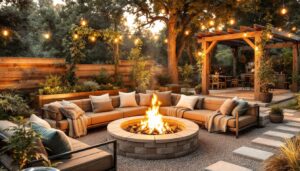
Adding garden cushions transforms basic seating into a cozy retreat where you’ll actually spend time. Place seating to face the best view of your garden, whether that’s the plants themselves or a focal point like a water feature or sculpture.
Think of shade areas as part of your garden’s function, not an afterthought. The best gardens balance productivity with comfort.
Design Low-Maintenance Landscaping Features
Not everything in your backyard needs to be edible or highly maintained. Hardscaping and long-term perennials reduce your weekly workload while filling visual space.
Pathways keep foot traffic off planted areas. Mulch paths are cheapest, lay 3-4 inches of wood chips over landscape fabric. Gravel paths look cleaner (pea gravel, not quarry dust) and drain well. Flagstone or paver pathways cost more but last decades and look polished. Width matters: 2-3 feet minimum for a single person, 3-4 feet if two people need to walk side by side.
Perennial plantings handle themselves after establishment. Choose plants suited to your USDA hardiness zone and your light conditions. Daylilies, coneflowers, black-eyed Susans, and ornamental grasses need minimal inputs once established and provide texture even when not flowering.
Water features add life and sound without heavy maintenance. A small recirculating fountain (200-500 GPH pump) needs monthly cleaning and regular topping off in hot weather, but beats labor-intensive koi ponds. Bird baths attract wildlife and sit well in garden nooks.
According to recent design trends explored by The Spruce, combining edible plants with low-maintenance ornamentals creates gardens that are both beautiful and functional. Mix native perennials with your vegetable beds, they attract pollinators and reduce pest pressure naturally.
Since maintenance time builds up over seasons, structure your garden so 70% of it runs on its own. Focus your effort on the herb and vegetable zones where you see the payoff.
Conclusion
Garden backyard ideas don’t require a master plan or a big budget. Start with one raised bed, add containers where they catch sun, introduce a simple trellis for vertical growth, and carve out a place to sit. Layer in shade and low-maintenance perennials as time and energy allow. Your backyard transforms through iteration, not overnight heroics. Build it to serve you, food, beauty, relaxation, or all three.