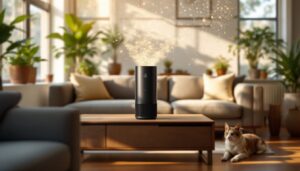
Indoor air quality matters more than ever, especially for homeowners concerned about allergens, pet dander, and airborne contaminants. Oransi air purifiers have built a solid reputation for delivering genuine filtration performance without unnecessary frills or Wi-Fi gimmicks. Whether you’re tackling seasonal allergies, odors from cooking or pets, or simply want to breathe easier in your home, understanding how an Oransi unit works and which model fits your space is the first step. This guide walks you through the key features, filtration technology, and practical setup considerations so you can make an informed choice.
Table of Contents
ToggleKey Takeaways
- Oransi air purifiers use genuine HEPA filtration and activated carbon to capture 99.97% of particles and odors, without relying on ionizers or ozone-generating gimmicks.
- Choose an Oransi model based on room size: entry-level for 200–400 sq ft, mid-range for 400–700 sq ft, and high-output models for spaces over 700 sq ft.
- Proper placement at least 12 inches away from walls and elevated off the floor is critical for optimal airflow and filtration performance.
- Replace pre-filters every 3–6 months, HEPA filters every 12–18 months, and carbon filters every 6–12 months to maintain peak filtering efficiency.
- Running an Oransi air purifier on medium fan speed provides the best balance between noise levels (under 60 decibels), filtration performance, and filter lifespan.
- Oransi ranks among top performers for pet-related allergen removal, making it an ideal choice for households with animals concerned about indoor air quality.
What Makes Oransi Air Purifiers Stand Out
Oransi has focused on mechanical filtration for years, steering clear of the ozone-generating gimmicks that some competitors peddle. The company’s philosophy is straightforward: HEPA filtration, activated carbon, and proper airflow engineering do the heavy lifting, not ionizers or UV lamps claiming miracle results.
What sets Oransi apart is their attention to real-world performance metrics. The unit’s Clean Air Delivery Rate (CADR) is prominently featured, which tells you how many cubic feet per minute of filtered air the unit actually produces. Many homeowners check CADR ratings when comparing units, and Oransi’s lineup offers transparent numbers.
Another practical advantage: Oransi units are relatively quiet for their filtration capacity. A blower motor pushing high-volume airflow through dense HEPA media tends to be loud. Oransi engineers have optimized housing design and motor efficiency to keep noise levels manageable during evening use. The actual sound output depends on fan speed, but running on medium settings keeps most models under 60 decibels, roughly the volume of normal conversation.
Key Features and Filtration Technology
HEPA and Carbon Filter Systems
Every Oransi air purifier includes a multi-stage filtration design that targets different particle sizes and pollutants. The first stage is a coarse pre-filter that catches larger debris, dust bunnies, pet hair, and fluff, extending the life of downstream filters.
The second stage is the HEPA filter (High-Efficiency Particulate Air), which captures 99.97% of particles 0.3 microns or larger. That includes dust mites, mold spores, pollen, and pet dander. Oransi uses genuine HEPA media, not fake “HEPA-type” filters that underperform. A true HEPA filter is denser and more restrictive, which is why adequate airflow design matters, otherwise the motor has to work harder and consume more energy.
The third stage is activated carbon filtration for odor and chemical removal. Activated carbon works by adsorption, trapping gaseous molecules on its porous surface. This handles cooking smells, pet odors, smoke, and volatile organic compounds (VOCs). Importantly, carbon filters have a limited lifespan and eventually saturate, they don’t regenerate. Oransi typically recommends replacing carbon filters every 6 to 12 months depending on usage and air quality.
Some Oransi models add a third carbon stage or higher total filter thickness, trading slightly longer filter life for deeper odor control. This matters if you live with smokers, cook heavily with pungent spices, or have multiple pets. The trade-off is a higher replacement filter cost and potentially slightly higher energy draw due to increased filter density.
Choosing the Right Oransi Model for Your Home
Room Size and Coverage Area Considerations
Oransi’s lineup includes several models sized for different room dimensions. The key metric is the coverage area in square feet, this is the room size the unit is designed to handle effectively.
For smaller rooms (200–400 sq ft, like a bedroom or home office), entry-level Oransi models work well. These units have lower CFM (cubic feet per minute) ratings, draw less power, and fit on nightstands or shelves without dominating the space. They’re also quieter and more affordable.
For medium rooms (400–700 sq ft, like a living room or larger bedroom), mid-range Oransi models deliver better performance. These units produce higher CFM output and filter the air more frequently, reducing the time it takes to achieve noticeable improvement.
For large open spaces (700+ sq ft), Oransi’s high-output models become necessary. These units come with more powerful motors, larger filter media, and higher CFM ratings. Placement matters: position the unit centrally or in the main living zone where it can pull air efficiently without obstacles blocking the intake.
A practical note: the stated “coverage area” assumes the door is closed and the unit runs continuously. If doors are open to adjacent rooms, air escapes, and performance drops. If you need to purify multiple rooms, running one larger unit in the main space or using two smaller units in separate zones both work, it depends on your layout and budget. Remember, air purification is not instantaneous: it takes time for air to cycle through the filtration system, so positioning near where you spend most time helps.
Installation, Maintenance, and Usage Tips
Installing an Oransi air purifier is straightforward, most are ready to use straight from the box. Unpack the unit, let it sit upright for 30 minutes before plugging in (if it was shipped upright and jostled), remove any protective plastic from the filter housing, and plug it in.
Placement is critical. Position the unit at least 12 inches away from walls and furniture to allow proper air intake. Don’t tuck it into a corner or behind a sofa: airflow will be severely restricted. A central location or near where you spend the most time (bedroom, main living area) works best. Keep the unit elevated slightly off the floor: placing it on a low shelf or table helps air circulation.
For maintenance, plan on replacing filters on schedule. Pre-filters last 3 to 6 months, HEPA filters 12 to 18 months, and carbon filters 6 to 12 months depending on air quality and usage. Many homeowners set calendar reminders. Running the unit 24/7 will consume filters faster than running it 8–12 hours per day, so adjust runtime based on your air quality needs and energy budget. A typical Oransi unit draws 40 to 100 watts depending on the model and fan speed, which is modest.
Use the fan speed setting wisely. High speed cleans the air faster but runs louder and depletes filters quicker. Medium speed balances performance and noise. Low speed is fine for nighttime or when you’re not home, though air cleaning takes longer. Most users find medium or medium-high is the sweet spot during waking hours.
One often-overlooked step: after replacing filters, run the unit at high speed for 15 to 30 minutes to condition the new HEPA media. This breaks in the filter and dislodges any loose fibers from manufacturing. It also gives you confidence that everything is seated correctly. According to independent testing, Oransi air purifiers rank, making them a popular choice for households with animals. If you’re comparing units, independent lab reviews show Oransi models deliver strong real-world filtration, especially for larger spaces. Keep the area around the intake grille clean: dust accumulation blocks airflow and forces the motor to work harder. A quick vacuum or damp cloth around the intake monthly keeps things running efficiently. And don’t ignore the pre-filter, if it clogs with dust, downstream filter life suffers. Some users wash and reuse pre-filters (many are not single-use), which saves money. Check your unit’s manual: not all pre-filters are washable.
Conclusion
An Oransi air purifier is a practical investment for homeowners serious about indoor air quality. The focus on genuine HEPA filtration, transparent CADR ratings, and reasonable noise levels makes these units a reliable choice for allergies, odors, and general air freshening. Measure your room, pick the right coverage area, place it correctly, and stay on top of filter replacements. Proper setup and maintenance unlock the full benefit of mechanical filtration without hype or unnecessary complexity.