Building a backyard patio doesn’t require a five-figure budget or a contractor license. With smart material choices, DIY sweat equity, and a practical mindset, homeowners can create an inviting outdoor living space for a fraction of what magazine spreads might suggest. Whether you’re working with a cramped side yard or a sprawling lot, budget-friendly backyard patio ideas focus on repurposing materials, building simple structures, and layering affordable lighting and greenery. This guide walks through concrete, actionable strategies to maximize your outdoor space without emptying your wallet, because the best patio is the one you’ll actually use and enjoy.
Table of Contents
ToggleKey Takeaways
- Reclaimed or recycled pavers cost $0.50–$1.50 per square foot compared to $2–$4 for new ones, making them an ideal choice for simple backyard patio ideas on a budget.
- DIY pergolas built from pressure-treated 2×4 lumber cost $300–$600 in materials and can be completed in a weekend, providing affordable shade without hiring contractors.
- String lights, solar garden fixtures, and candle lanterns transform patios with warm ambiance for $15–$40 per strand or just a few dollars per solar light.
- Thrifted outdoor furniture and pallet seating reduce costs to under $50, while spray paint ($7–$10 per can) unifies mismatched pieces into a cohesive design.
- Native plants and container gardening with repurposed buckets cost $1–$8 per plant and provide natural beauty with minimal maintenance and watering needs.
- Start small and layer improvements over time rather than completing your budget patio all at once, prioritizing a solid foundation, seating, and welcoming ambiance.
Repurpose Materials for Patio Flooring
The foundation of your patio sets the tone for the entire space. Pouring a full concrete slab or laying pavers can quickly drain a budget, but smart material choices offer solid alternatives.
Reclaimed or recycled pavers, obtained from salvage yards or craigslist sales, cost significantly less than new materials while adding character. A typical reclaimed paver runs $0.50–$1.50 per square foot, compared to $2–$4 for new pavers. Before laying, inspect for chips and uneven surfaces, they’re fine for a casual patio but may require a thicker, more robust base layer.
Crushed gravel, pea gravel, or decomposed granite provide budget-friendly flooring if you’re willing to accept minimal maintenance needs. A 2-inch depth costs roughly $100–$200 for a 12×12-foot area, and installation is straightforward: level the ground, add landscape fabric to suppress weeds, and rake the material even. Gravel does shift over time and requires occasional raking, but it’s replaceable and looks informal in a charming way.
Another practical option is stamped or stained concrete. If your yard already has a poured foundation, paying a pro to add texture and color runs $8–$15 per square foot, far less than starting from scratch. DIYers can also pour their own concrete base and apply a simple acid stain themselves for a polished look at a fraction of contractor pricing.
Wood deck boards create warmth and work well in smaller patio areas. Pressure-treated lumber for a simple platform deck costs less than pavers over the same footprint, and you control the design. Just ensure the base is properly graded to prevent water pooling, which causes rot and shortens the deck’s lifespan. Standard pressure-treated lumber sits around $1–$3 per linear foot, and a basic 12×12-foot deck frame typically runs $150–$300 in materials.
Create Shade and Comfort Without Breaking the Bank
A patio exposed to full sun becomes unusable in summer heat. Shade is essential, and building it yourself saves thousands compared to hiring a contractor for a permanent structure.
DIY Pergolas and Shade Structures
A simple pergola is the workhorse of budget patio design. Built from 2×4 or 2×6 pressure-treated lumber, a basic 12×12-foot pergola costs $300–$600 in materials and takes a weekend with a helper and basic tools. Attach the frame to concrete footings using bolts, this prevents rot and keeps the structure stable in wind.
For climates that need real shade (not just dappled light), add shade cloth or a removable retractable system. Shade cloth runs $1–$3 per square yard and clips or screws in place: it filters 30–90% of sunlight depending on the density you choose. For even cheaper shade, old bedsheets or burlap draped over a frame work in a pinch, though they won’t last as long outdoors.
If building a full pergola feels ambitious, a simple pop-up canopy ($80–$200 from box stores) provides instant shade and moves easily if you rearrange your space. It’s not permanent, but it’s ideal for renters or those testing the waters before committing to a fixed structure.
Outdoor Seating on a Shoestring Budget
Seating eats budgets fast, but you don’t need designer outdoor furniture to create a comfortable gathering spot. Pallets, often free from warehouses or small businesses, make sturdy bases for DIY seating. Stack two to three pallets, sand them smooth, and top with foam and outdoor fabric to create a lounge bench that feels intentional and costs under $50 in materials.
Thrift stores and online marketplaces are goldmines for outdoor seating. A cast-iron bistro table for $15 and mismatched chairs refurbished with spray paint ($7–$10 per can) transform into a cohesive dining set. Outdoor spray paint designed for metal (like Rust-Oleum) adheres well to metal and wicker and lasts multiple seasons if you’re not in a coastal salt-air environment.
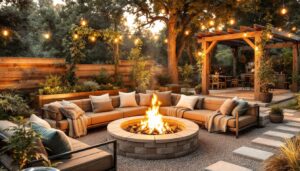
Woven outdoor poufs and floor cushions created from weather-resistant fabric scraps provide flexible, casual seating for under $20 each. They’re lightweight, easy to store, and work alongside a bench or scattered on a gravel area. If your patio doubles as a gathering spot, a DIY fire pit surround with salvaged brick or stone blocks creates free seating while adding ambiance.
Add Ambiance With Affordable Lighting and Decor
Lighting transforms a patio from purely functional to genuinely inviting. You don’t need expensive landscape lighting systems: string lights, solar fixtures, and DIY options deliver the same effect for a fraction of the cost.
String lights, warm white, not cool blue, create an intimate atmosphere and cost $15–$40 per 20-foot strand from hardware stores or online retailers. Run them overhead in a crisscross pattern, zigzag across a pergola, or drape them along fencing. For durability, choose Edison-style LED string lights, which last longer than incandescent and use less electricity. Many run on standard outdoor timers so they activate at dusk automatically.
Solar garden lights ($2–$8 per fixture) line pathways or stake into planters without requiring electrical work. They’re not bright enough for task lighting but add visual interest and cost virtually nothing to operate. Cluster them in groups of five or more for noticeable illumination.
Candles and lanterns are the cheapest ambiance booster. Paper or metal candle holders with battery-operated lights (which don’t go out in wind) cost a few dollars each. Grouped on tables or hung from shepherd’s hooks, they soften the space without electricity.
For decor, think contrast and layers rather than quantity. A young house love approach suggests painting a single wall or fence section in a bold color, which redefines the space without expensive structural changes. DIY wall art, painted signs, stenciled patterns, or mounted wooden shelves for plants, cost under $30 in materials and turn bare walls into focal points. Affordable outdoor rugs ($30–$80) define seating zones and add color: buy outdoor versions (not indoor rugs, which rot) from discount retailers.
Landscaping and Greenery to Complete Your Patio
Plants soften hardscaping, provide natural shade, and create a sense of a real outdoor room. You don’t need a landscape designer to get this right, just plants that thrive in your region.
Start with budget perennials and native plants suited to your USDA hardiness zone. Check your local cooperative extension for free guidance on what thrives locally: native plants typically need less water and maintenance than exotics. Many native perennials cost $3–$8 per small plant and multiply over seasons, filling space cheaply as they mature.
Container gardening offers flexibility and low cost. Repurpose old buckets, wooden crates, or large yogurt containers as planters: drill drainage holes in the bottom and fill with potting soil and your choice of plants. Five or six containers at $1–$3 each create a garden vignette near seating areas. Vegetables like basil and cherry tomatoes grow well in pots and provide both beauty and harvest.
Vines on trellises provide vertical greenery and shade without eating horizontal space. Clematis, honeysuckle, or climbing hydrangea establish faster than you’d expect. A simple wooden trellis costs $20–$50 and mounts to fencing or a pergola post. Within two seasons, a mature vine fills the structure with foliage and flowers.
Grass alternatives like clover lawns or native sedges reduce mowing while providing a softer walking surface than gravel. If your patio area is small, skip the grass altogether and rely on hardscape and container plants, less maintenance, more visual interest. making manzanita for creative DIY landscaping ideas that stretch a small budget across meaningful green space.
Conclusion
Building a backyard patio on a budget means prioritizing the elements that matter most: a solid foundation, comfortable seating, and welcoming ambiance. Repurposed materials, DIY structures, and smart plant choices turn limited budgets into polished, functional outdoor rooms. Start small, a patio doesn’t have to be finished tomorrow, and layer improvements as time and money allow. The goal isn’t perfection: it’s a space that genuinely improves how you and your family spend time outdoors.