Hosting a wedding reception in your backyard transforms a personal space into a memorable celebration without the hefty venue costs. Whether you’re working with a modest urban lot or a sprawling suburban yard, thoughtful planning and practical design choices create an intimate gathering that feels polished and special. The key is honest assessment of your space, smart budget allocation, and focusing on details that matter, not overthinking everything. This guide walks through the essentials: layout decisions, decorating on a budget, lighting magic, food logistics, entertainment, and backup plans. You don’t need a contractor or event planner to pull off a backyard wedding: you just need direction.
Table of Contents
ToggleKey Takeaways
- Small backyard wedding reception ideas thrive on smart space planning—measure your yard, divide it into functional zones (ceremony, dining, cocktail), and ensure at least 3 feet of clearance between furniture groupings for comfortable flow.
- Invest your budget where guests experience it most: quality food, beverages, and comfort rather than expensive decorations—skip pricey florals and use greenery, candles, and thrift-sourced items to achieve an elegant look for less.
- Lighting transforms a backyard after dark; string warm-white café lights overhead and layer in lanterns, luminarias, and accent lighting to create an enchanted atmosphere that flatters guests and photographs beautifully.
- Set up separate beverage and food stations to prevent bottlenecks, use slow cookers and ice-nested bowls for temperature control, and assign a friend to manage drinks so you’re free to enjoy your guests.
- Always have a weather contingency plan—tent rentals, pop-up canopies, or an indoor backup space—and communicate it to vendors and family before the event to prevent day-of panic if rain or wind strikes.
Layout and Space Planning for Intimate Gatherings
Start by measuring your backyard and drawing a simple overhead sketch. Note existing features: trees, patios, steps, utilities, and shade patterns throughout the day. A small backyard, say 20 by 30 feet, accommodates 30–50 guests comfortably if furniture and flow are planned.
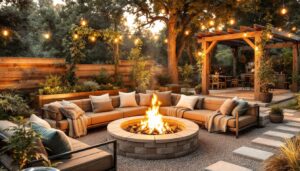
Divide your space into zones. A lounge or cocktail area, a dining section, and a focal point (dance floor or altar) each need breathing room. Guest count drives furniture choices: opt for standing-height cocktail tables that use less footprint than full-height dining tables. High-top tables seat two to four comfortably. Arrange seating in clusters rather than rows so conversations flow naturally.
Consider sightlines. Position the ceremony focal point where the majority can see without craning necks. If you’re using a small backyard entertaining space, limit the ceremony to one compact area and designate the rest for mingling and dining. Narrow pathways become bottlenecks, aim for at least 3 feet of clearance between furniture groupings. If your yard slopes, level a main gathering area with plywood subflooring or rent leveling plates.
Budget-Friendly Decorating Solutions That Don’t Sacrifice Style
Skip pricey floral arrangements. String a simple framework of cafe lights (discussed in the lighting section) and let greenery do the heavy lifting. Borrow or repurpose items: use potted plants from your house, borrow folding chairs from friends, and source vases from thrift stores. A fresh coat of paint on mismatched chairs ($15 per chair in latex paint) unifies the look instantly.
Tablescapes don’t need florals to shine. Layer a solid-colored table linen in white, cream, or a muted tone. Add a simple runner down the center, linen, burlap, or kraft paper ($1–2 per yard). Place name cards, candles in mason jars, and local greenery clippings. DIY centerpieces using items you already own: branches in clear glasses, candles grouped in threes, or potted herbs that double as favors.
Budget allocation matters. Spend on things guests experience directly: food, beverages, and comfort. Skip unnecessary rentals. Borrow or make do with what you own for seating, if possible. Align your style with creative backyard ideas that emphasize natural elements, wood, stone, plants, which cost far less than fancy linens and are timeless in photos.
Lighting Ideas to Transform Your Backyard After Dark
Lighting is the single biggest mood-setter in an evening backyard event. Plan for three layers: ambient (overall visibility), accent (focal features), and task (dining tables).
Cafe lights (also called bistro or string lights) are the workhorse of backyard weddings. These small warm-white bulbs strung overhead create an enchanted canopy effect. Run them from house to fence, tree to tree, or in a crisscross pattern overhead. Plan for roughly one light every 4–6 feet: 50–100 feet of lighting costs $20–50 for basic sets. Avoid cool white: warm white (2700K color temperature) flatters skin tones and feels intimate.
Layer in lanterns with candles or battery LEDs for tables and pathways. Real candles add romance but require wind management, a sudden gust ruins photos. Battery-operated candles eliminate that risk and won’t blow out during toasts. Line walkways with luminarias (paper bags weighted with sand and a tea light inside) for $0.50 per bag.
Uplight trees or a fence section with solar stake lights ($2–5 each) or borrow a uplighting fixture. A single accent light on a key background element, fence, tree, or backdrop, adds depth and prevents the flat, evenly-lit look of poor lighting. Test your setup during dusk the week before to ensure coverage and outlet access.
Food and Beverage Setup for Small Gatherings
Small gatherings allow flexibility in service style. A buffet setup minimizes staffing needs: arrange food on a table against the fence or house wall, leaving the yard open for mingling. Alternatively, stations (appetizer bar, carving station, dessert table) spread guests throughout and reduce line bottlenecks.
Beverage logistics matter more than you’d think. Set up a drinks station away from the food table so guests don’t cluster in one spot. A cooler with ice, bottles, and glasses at waist height beats asking guests to walk inside. For beer and wine, calculate roughly one bottle per guest for a 3–4 hour event: adjust upward for early evening. Assign one friend to refill ice and reset glassware during the reception so you’re not tethered to the drinks table.
Temperature control is critical. Hot foods cool quickly outdoors: keep heated dishes in slow cookers or chafing dishes. Cold dishes stay cold in bowls nested on ice. If catering, confirm setup time and that vendors bring their own tables, chafing dishes, and serving utensils, you shouldn’t provide these. For DIY catering, prep as much as possible ahead. Foods that transport well: salads, sandwiches, pasta, grilled items, and desserts. Avoid dishes requiring last-minute plating. Check backyard entertaining ideas for seasonal menu inspiration that aligns with outdoor service.
DIY Entertainment and Music Options
Music sets the tone more than decorations. A Bluetooth speaker connected to a playlist on your phone works for small gatherings: aim for 50+ watts of power to fill a yard without distortion. Position the speaker centrally, not in a corner. For a more polished feel, rent a DJ for the last few hours, or hire a musician (acoustic guitarist, violinist) for ceremony and cocktail hours, often cheaper and more intimate than a full DJ.
Create playlists ahead: ceremony (soft, instrumental), cocktail hour (upbeat but not dance), dinner (conversational volume), and dancing (high energy). Aim for mix of crowd-pleasers and personal touches. Test audio levels during daylight so you’re not troubleshooting at 8 p.m.
Entertainment beyond music: lawn games (cornhole, giant Jenga, cards) keep guests relaxed during cocktail hour. A photo booth corner, string lights, a simple backdrop, instant camera, costs under $50 and entertains guests for hours. Avoid costly entertainment that doesn’t match your guest list (a photo booth works for all ages: a DJ is standard). For unique touches, explore outdoor entertainment center ideas that align with your space.
Weather Contingencies and Backup Plans
A backyard wedding depends on weather. Always have a contingency, not just a vague hope it doesn’t rain. Options include a tent, relocating indoors, or rescheduling. A tent rental ($1,000–3,000 for a 20×30 frame tent, depending on region) is the safest bet. Ensure the rental company confirms ground clearance, electrical hookups, and that the tent doesn’t need to be anchored to permanent structures (permits may be required). Request a quote weeks ahead: peak season fills fast.
Instead of a full tent, a smaller pop-up canopy ($50–200 to purchase or rent) over the food and beverage area protects the essentials. Guests tolerate standing in drizzle for ceremony and cocktails: soggy appetizers are unacceptable.
Check weather forecasts three days before, then again the day of. Have a backup indoor space (house, garage, community center) prepped if relocation is needed. Communicate the contingency plan to the caterer, DJ, and key family members, everyone should know the backup before day-of chaos. A sudden downpour shouldn’t derail the event: preparation prevents panic.
Consider the season. Summer means afternoon thunderstorms in many regions: spring and fall bring wind. Research typical weather for your location and date. Southern Living and Gardenista’s tips for simple outdoor weddings both address seasonal planning for outdoor events.
Conclusion
A backyard wedding reception succeeds through smart planning, not lavish spending. Nail the fundamentals: measure your space, zone the layout, invest in lighting, organize food and drinks logically, and prepare for weather. Skip unnecessary decor: let your yard’s natural features shine. DIY what you enjoy, delegate what’s stressful, and focus on why you’re gathering, to celebrate with people you love. Your backyard, thoughtfully arranged, is as memorable as any rented venue.