Arizona homeowners face a unique challenge: creating an inviting backyard in a climate where 110-degree summers make outdoor time uncomfortable. But a well-designed Arizona backyard doesn’t require expensive contractors or major renovations. With smart choices around desert landscaping, shade, water features, and hardscaping, you can build a stunning outdoor retreat that works with the desert environment rather than against it. These seven budget-friendly DIY ideas transform your backyard into a functional gathering space while keeping costs low and the work manageable.
Table of Contents
ToggleKey Takeaways
- DIY Arizona backyard ideas leverage native desert plants, shade structures, and smart hardscaping to create functional outdoor spaces without expensive contractors.
- Replace water-hungry turf with drought-tolerant natives like palo verde, desert lantana, and cacti, which thrive in Arizona’s heat and require minimal irrigation once established.
- Build a budget-friendly pergola ($300–$600) or ramada with shade cloth to make your backyard usable during intense summer heat, dropping temperatures by 10–15 degrees.
- Install a low-maintenance water feature using a submersible pump and basin ($150–$300) to cool the air and create a peaceful atmosphere while keeping evaporation in mind.
- Define your backyard layout with decomposed granite pathways and permeable pavers as affordable, long-lasting hardscaping that resists desert weather and requires minimal upkeep.
- Start with one or two projects—such as native plantings and a shade structure—then expand gradually as budget and time allow to evolve your outdoor retreat.
Desert Landscaping With Native Plants
The easiest way to reduce maintenance and water bills is to replace thirsty turf with drought-tolerant natives. Arizona’s desert plants evolved to thrive in heat and minimal rainfall, so they’ll look healthy year-round without constant irrigation.
Start with staples like palo verde trees, desert marigold, brittlebush, and desert lantana. Cacti and succulents (barrel cactus, agave, and sedums) add texture and structure without fussiness. Many nurseries sell 15-gallon specimen plants for $20–$50, making them affordable bulk landscaping tools.
The prep work is crucial here. Clear away old sod or dead plantings, loosen the soil to a depth of 12–18 inches, and amend with compost if your soil is compacted caliche (that hard calcium layer common in Arizona). Plant in fall or early spring when soil temps are cooler, don’t plant in summer heat. Water new plantings weekly for the first month, then back off. Most desert natives need almost no supplemental water once established.
Use 2–4 inches of wood-chip mulch or rock to insulate soil and reduce evaporation, but keep it a few inches away from plant stems to prevent rot. Rock is popular in the Southwest and requires zero maintenance: wood chips break down and improve soil, so choose based on your aesthetic preference and budget.
Build A Shade Structure For Desert Heat
Shade is non-negotiable in Arizona. A patio that gets full afternoon sun becomes unusable by 2 p.m. in summer. Building your own shade structure saves thousands compared to hiring a contractor and takes a weekend or two of work.
Pergola And Patio Shade Options
A freestanding or attached pergola is the go-to DIY choice. Pressure-treated lumber (2×6 beams and 2×8 joists spaced 16 inches on center) handles Arizona’s wind and heat. A 12×12-foot pergola costs $300–$600 in materials and requires only basic carpentry: post holes, concrete footings, and bolted beam connections. Skip the metal fasteners at first if you’re unsure: lag bolts through pre-drilled holes work fine for light-to-moderate loading.
For more shade, add shade cloth (50–70% opacity) or roll-up fabric screens on the south and west sides. These cost $3–$8 per linear foot and clip directly to the pergola frame. In winter, roll them up so low-angle sun warms the space: in summer, deploy them to drop temps 10–15 degrees.
Alternatively, a ramada, a simple open-sided roof structure, works great if you’re not handy with joinery. Two-post designs with a simple rafter system take one weekend and cost under $500. Small Backyard Ideas for entertaining spaces often rely on these basic structures.
Don’t position shade directly over existing hardscape without evaluating drainage. Concentrated water runoff from a big roof can erode soil or pool in patios. Install a simple gutter system (corrugated aluminum, ~$0.50/ft) or slope your patio slightly away from the structure.
Create A Low-Maintenance Water Feature
A fountain or small pond cools the air and provides that peaceful ambient sound that masks traffic. You don’t need a koi pond, just a small recirculating water feature that runs on a pump.
The simplest build: a raised basin (concrete block or stacked stone, 24 inches deep), a submersible pump (500–1500 GPH depending on size, $30–$80), and either a fountain head or a spillway. Total material cost: $150–$300. The pump sits on a brick or stone pedestal in the basin’s floor, the water recirculates, and you refill the basin weekly (evaporation in desert heat is real).
Better yet, skip the excavation and buy a self-contained tabletop fountain or bowl fountain ($100–$250). These come with a pump already installed: you just add water and plug it in. They’re portable, easy to drain for winter if you live in an area with freezing temps, and perfect for a patio corner.
Line your basin with pond liner (EPDM rubber, 45-mil thickness) to prevent leaks. If using concrete blocks, seal the interior with concrete sealant first, or the porous blocks will wick moisture and weaken over time. Keep the water clear by adding a small skimmer or changing the water every 2–3 weeks. In dusty Phoenix and Tucson yards, algae blooms happen fast.
Place your feature where it catches evening light, it’ll look magical and won’t create glare issues like midday south-facing water can.
DIY Outdoor Seating And Entertaining Areas
Your outdoor space is only valuable if you can actually sit and relax there. Build basic seating areas with inexpensive materials that hold up to heat and UV exposure.
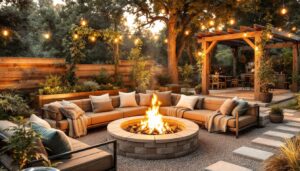
Concrete bench blocks (cinder blocks, 8×16 inches) stacked two high and topped with a weathered wood plank or 2×10 treated lumber create sturdy benches for under $50. Paint the blocks in a desert-friendly earthy tone, or leave them raw for a modern look. Space benches around a low-profile fire table (propane, $150–$300) or make a simple gravel and stone-lined seating area with scattered cushions.
If you want a dining setup, a picnic-style table can be built from 2×6 and 2×8 pressure-treated lumber in a weekend. Typical dimensions are 36 inches tall (standard table height), 30 inches wide, and 6–8 feet long. Use galvanized bolts and lag screws to resist rust: stainless steel is overkill here. Sand the finished table and apply exterior wood stain (not paint, stain breathes better in desert heat and hides weathering).
For lounging, pairing Outdoor Entertainment Center setups with budget deck chairs is smart. Look for HDPE plastic or aluminum-frame chairs ($40–$80 each), they won’t splinter or rust and dry fast after a rare desert rain.
Space your seating to take advantage of shade at different times of day. Morning coffee area on the east, afternoon seating under your pergola, and evening lounge spots on the north side where heat lingers least.
Add Hardscaping With Pavers And Gravel
Hardscaping defines the backyard‘s bones and creates usable zones without ongoing maintenance. Permeable pavers, decomposed granite, and crushed rock are affordable Arizona staples that look polished without being fancy.
Decomposed granite (DG) is ideal for pathways and base layers. It compacts into a firm surface for $8–$12 per cubic yard and requires a simple 2×4 or metal edging to contain it. Lay down landscape fabric first (prevents weeds), spread the DG 2–3 inches deep, and water it lightly so it settles and binds. Recompact yearly: it’s a recurring cost, but way cheaper than concrete.
Concrete or composite pavers work for patios and dining areas. Standard 12×12-inch pavers cost $2–$5 each. Lay them on a 4-inch gravel base with 1 inch of polymeric sand between joints. Polymeric sand ($0.15–$0.30 per linear foot) hardens when wet and prevents weeds. If you’re not experienced laying pavers, renting a plate compactor ($40/day) is worth it, uneven pavers trip people and look sloppy.
For a casual, rustic look, flagstone or stacked rock walls add height and visual interest. Local Arizona flagstone runs $3–$8 per square foot. Dry-stack (no mortar) if you’re building a short retaining wall under 3 feet tall. For anything higher or structural, use mortar and consider hiring a mason, load-bearing walls that fail can be dangerous and costly to rebuild.
Gravel is messy in some situations (dust storms, foot traffic spreading it), so reserve it for low-traffic areas or under shade structures. In high-traffic zones, Backyard Entertaining areas especially, opt for pavers or stamped concrete.
Conclusion
Building an Arizona backyard on a budget is entirely doable if you plan around the climate. Native plants, shade structures, a small water feature, basic seating, and smart hardscaping give you a cohesive, functional outdoor space without a hefty price tag. Start with one or two projects this season, maybe a pergola and some native plantings, then add more as time and budget allow. Your backyard will evolve into a true oasis.